G0KSC SC14407M 7el 144Mhz Yagi
- Gain
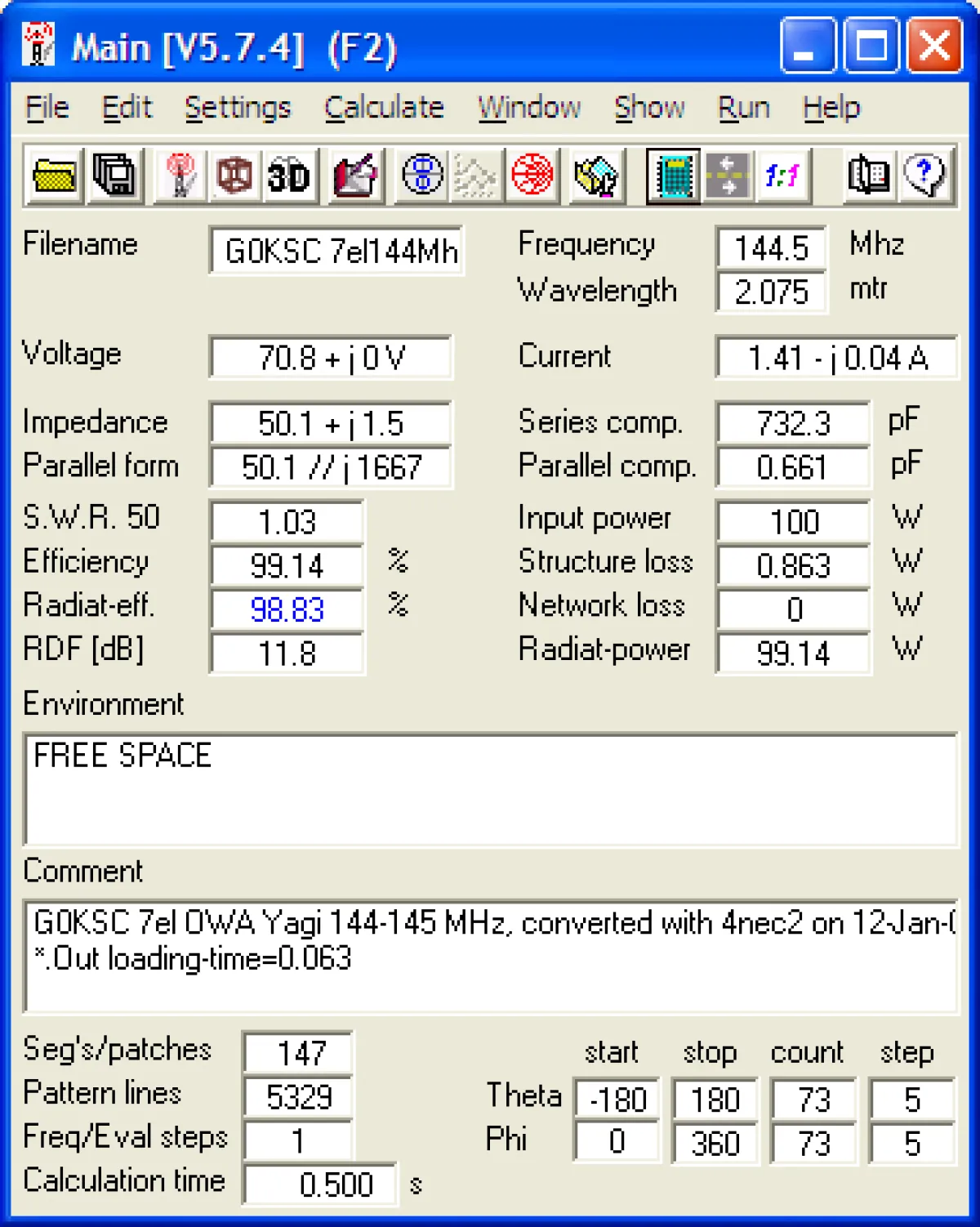
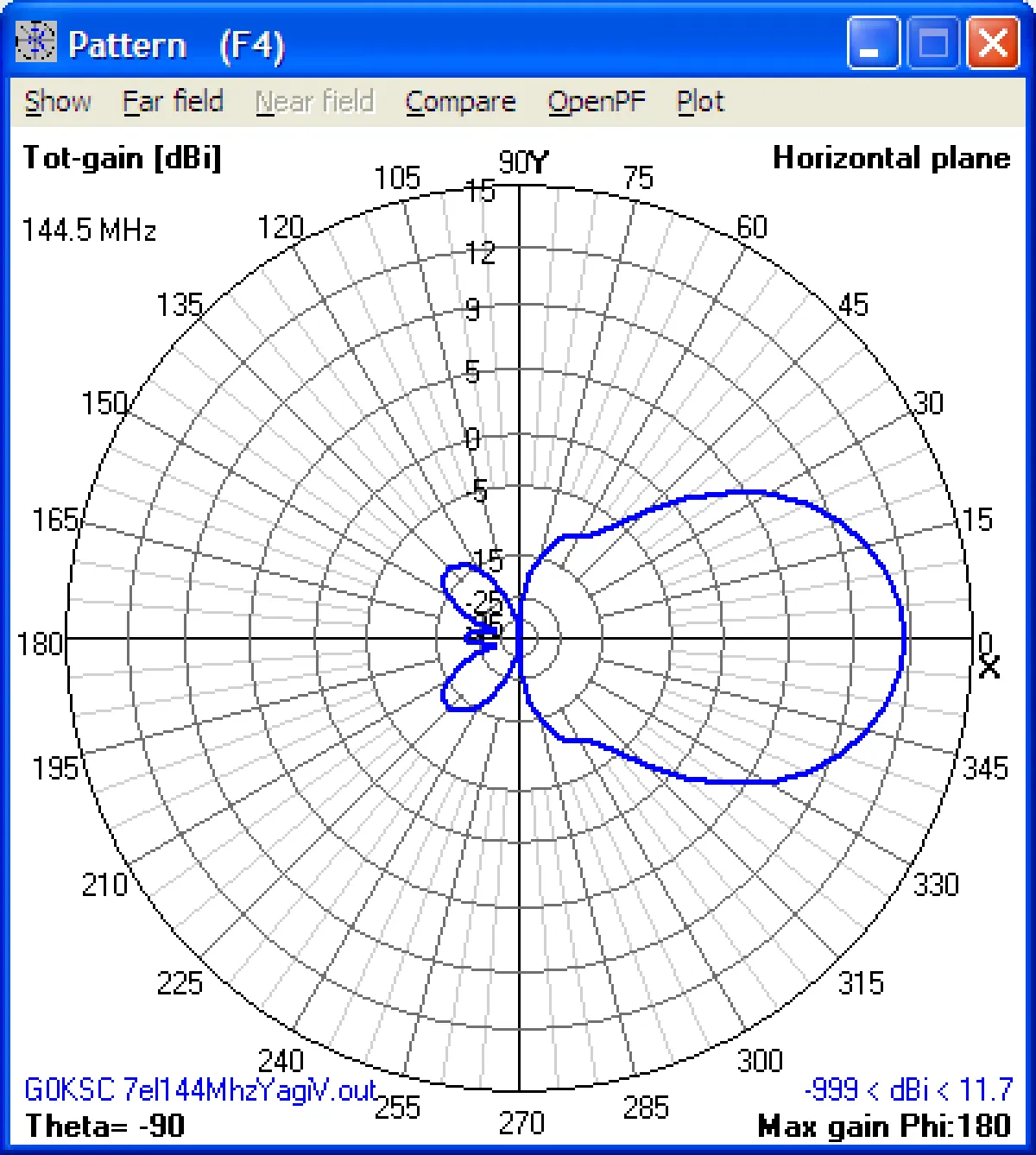
- 11.73 dBi
- F/B
- 34.32 dB
- Elements
- 7
Performance
- Frequency
- 144–145 MHz
- Gain
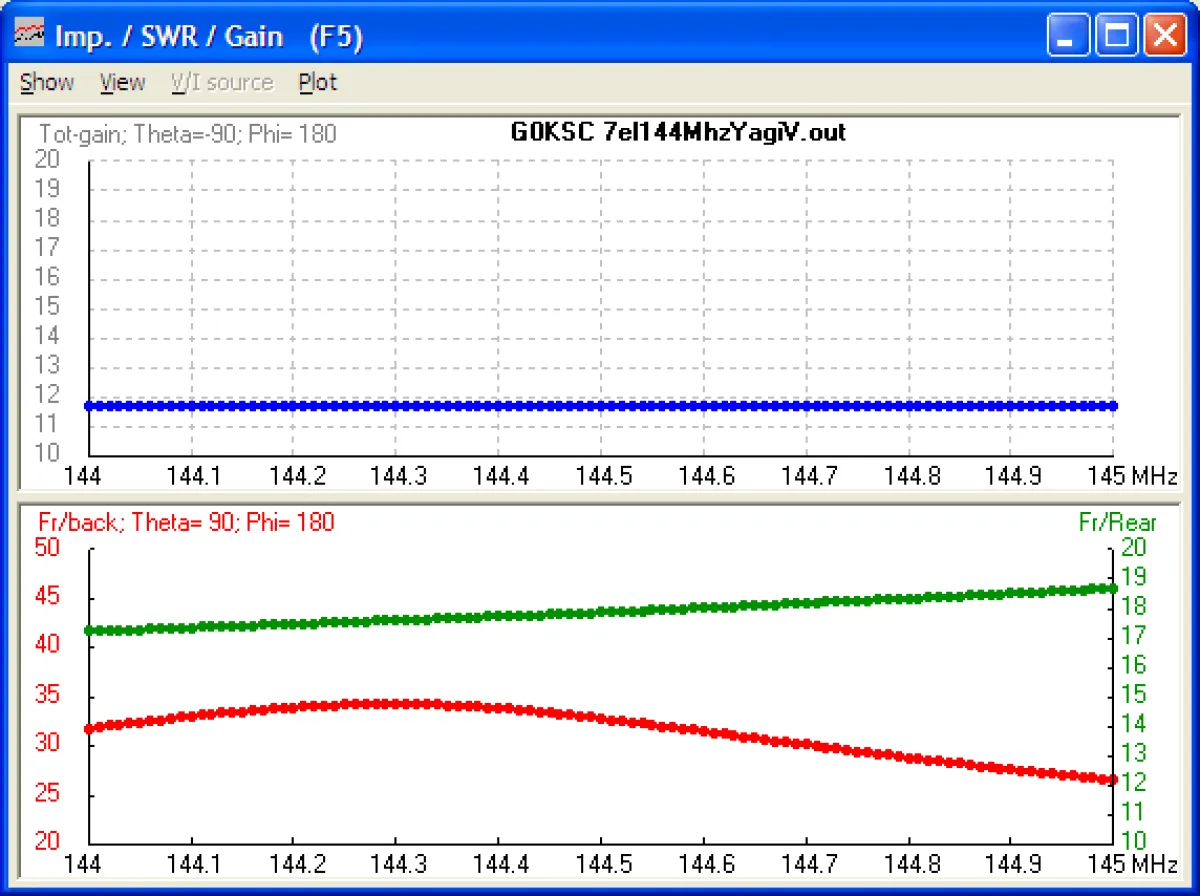
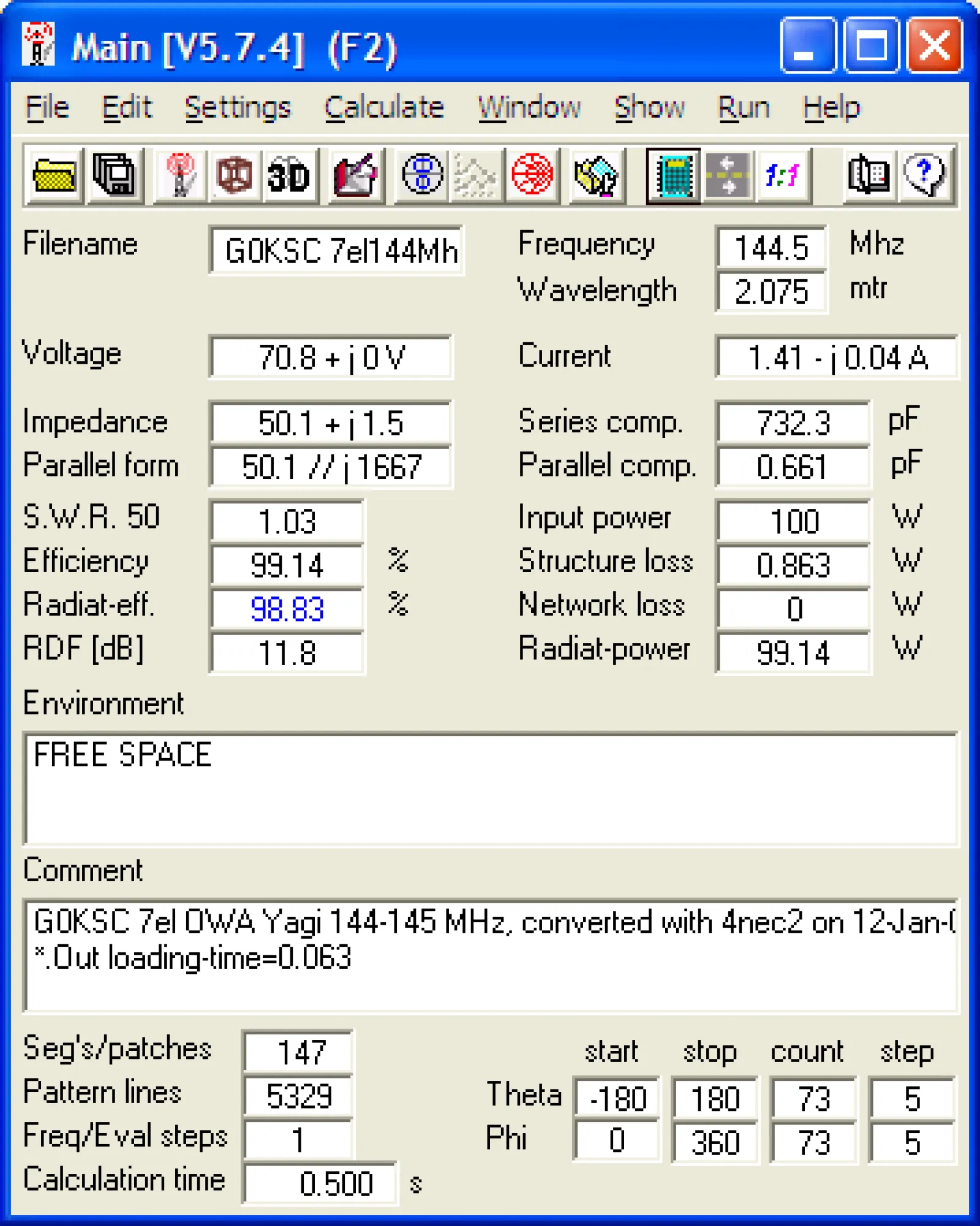
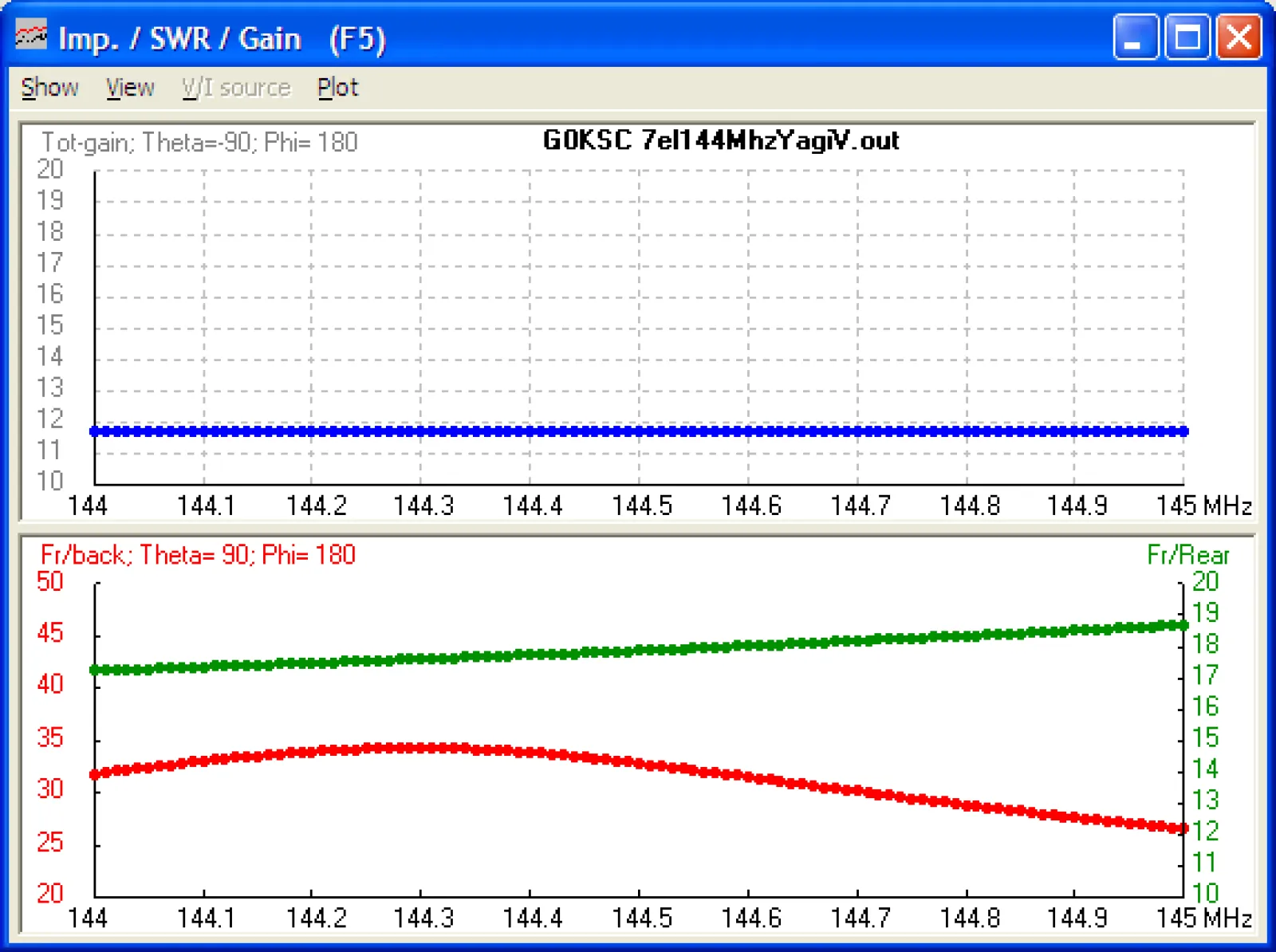
- 11.73 dBi
- Front-to-back
- 34.32 dB
- Elements
- 7
- VSWR (max)
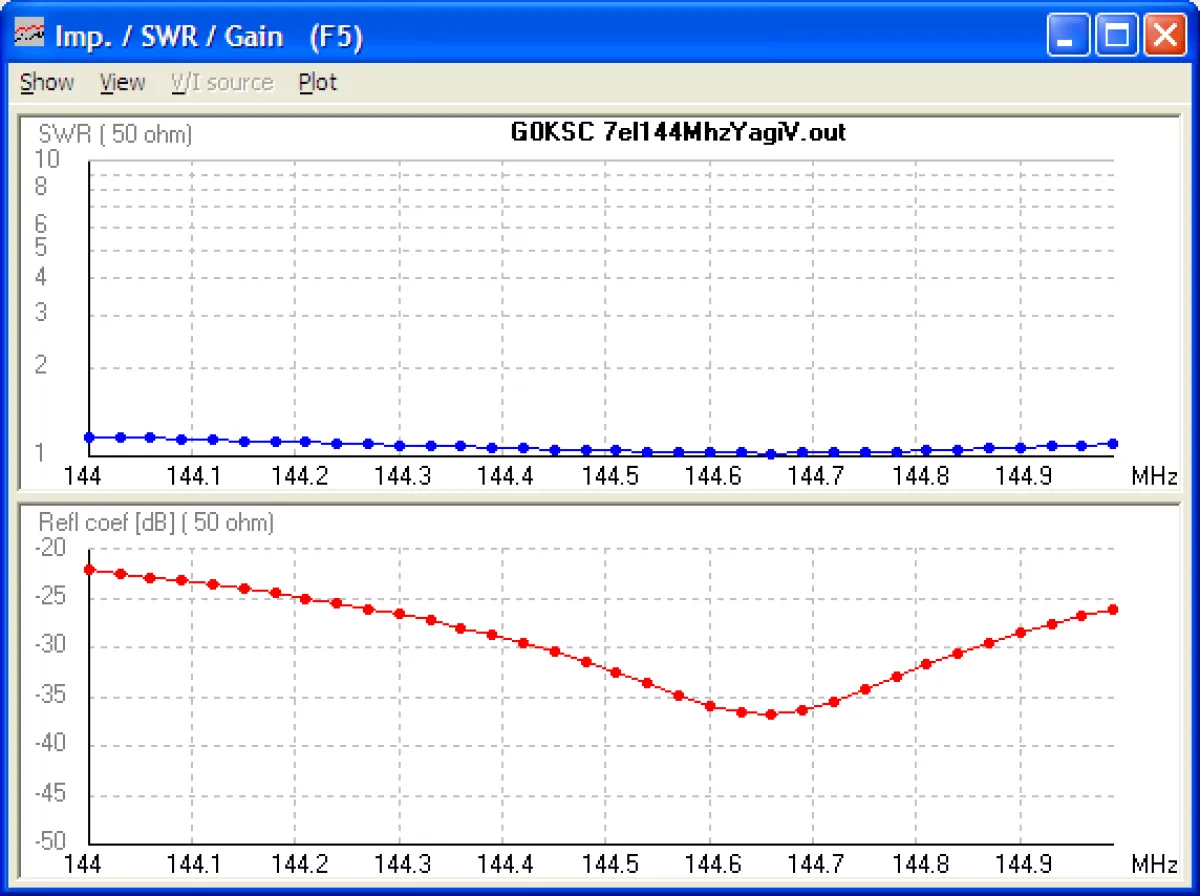
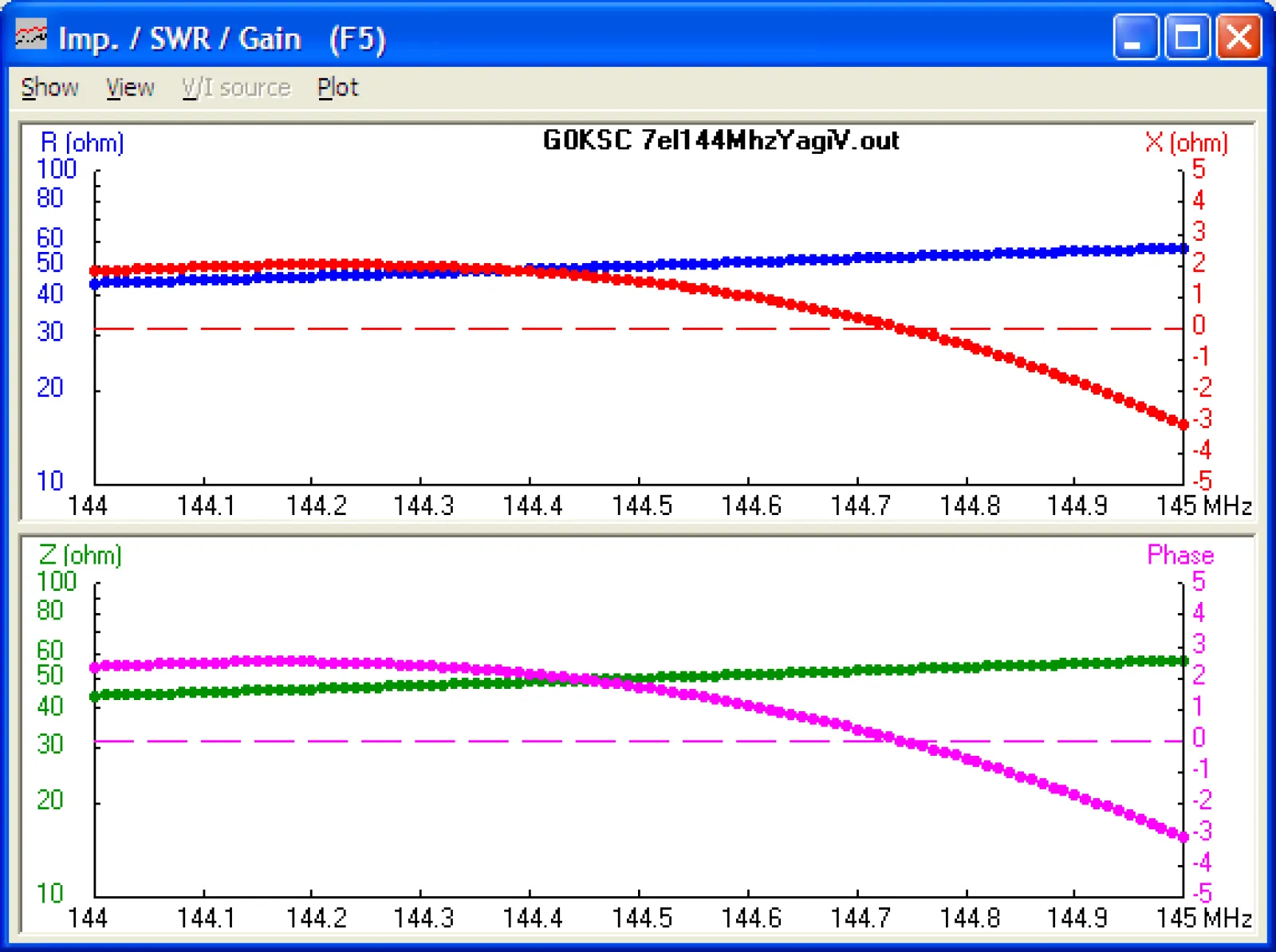
- 1.2 VSWR
Element dimensions
Element dimensions (parsed from legacy body — check before publishing)
| Element | Position | Note |
|---|---|---|
| Ref | 0 mm | parsed from legacy body — confirm position vs length |
| D3 | 1021 mm | parsed from legacy body — confirm position vs length |
| D4 | 1562 mm | parsed from legacy body — confirm position vs length |
| D5 | 2140 mm | parsed from legacy body — confirm position vs length |
Plots
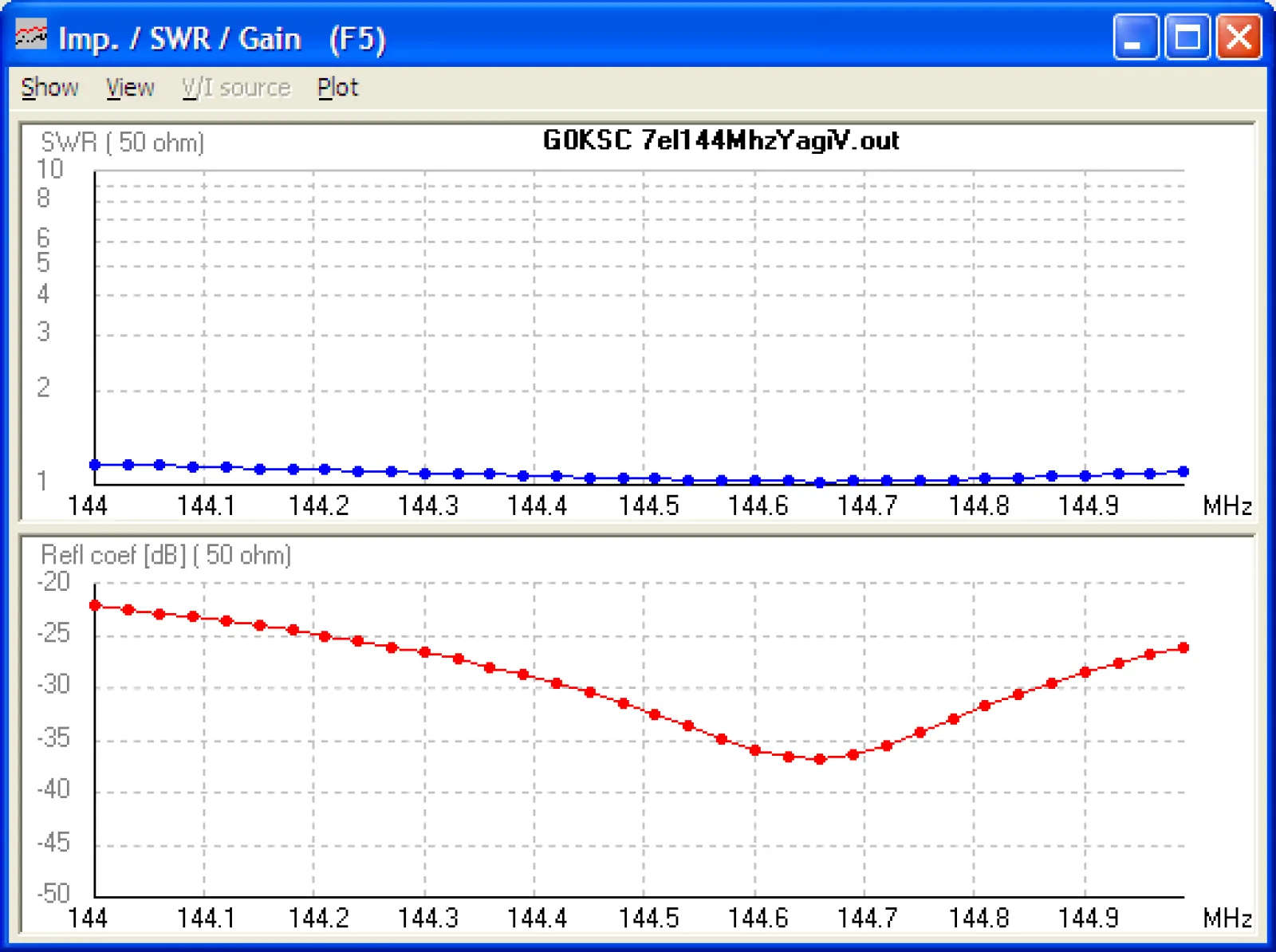
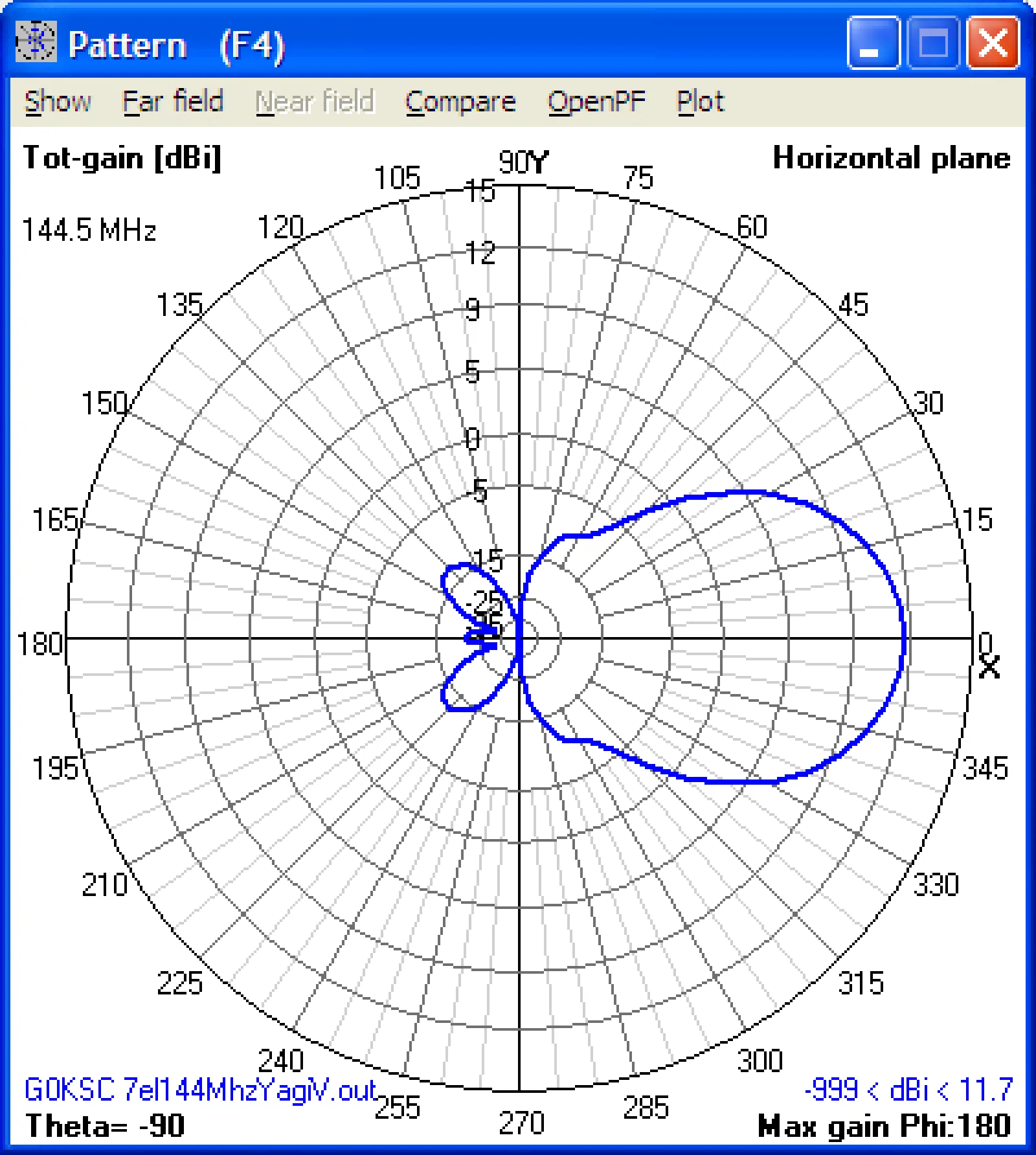
G0KSC SC14407S 7el 144Mhz Yagi Antenna with a 2.14 Metre Length Boom
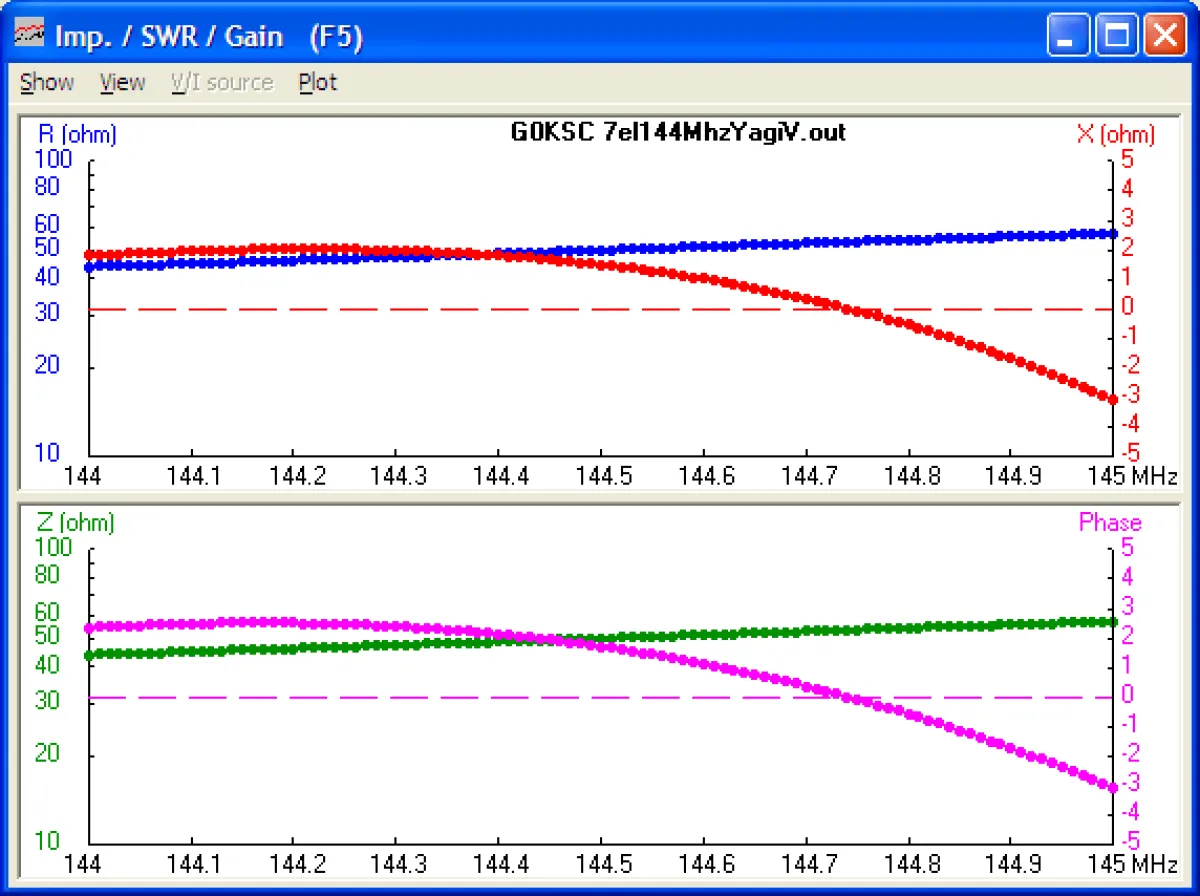
This Yagi has been designed to cover 144Mhz to 145Mhz with an SWR figure less than 1.2 and at the same time exhibits a very good Front to Back ratio. It has a short length boom of 2.14 metres and therefore can be made from a single piece 1inch square tube section. No boom support will be required.
Remember, this is a short, very wide band Yagi so there is a little less gain than you could achieve from a beam with seven elements. However, this antenna will not be affected be changes in weather or nearby antennas which can have an effect on lower impedance types.
Dimensions in Metres
Element spacing:
Ref = 0
Driven = .239
D1 = .318
D2 = .621
D3 = 1.021
D4 = 1.562
D5 = 2.14
Element sizes per element half:
Ref = .517
Driven = .497
D1 = .466
D2 = .457
D3 = .454
D4 = .451
D5= .436
Performance figures @ 144.300Mhz:
Froward Gain: 11.73dBi free space
Front to Back: 34.32dB
Radiation angle at 10 Metres above ground: 3 degrees
Element diameter:
Each element is made out of single piece 1/2 inch (12.7mm) aluminum tubing Each element half length needs to be doubled in order to gain your total element size. No difference is length needs to be calculated for the 1inch or 1,1/4 inch boom as the elements sit high enough above the boom for the boom to have no influence.
NOTE:
You can build this antenna with 13mm diameter tubing using the same parameters above. Slightly higher front to back ratio and forward gain will be seen along with a narrower SWR curve.
For construction information see 'G0KSC insulators' and the UKSMG article from the main menu on the home page.