
9 element LFA Yagi for 70MHz
- Gain
- 14.2 dBi
- F/B
- 26.15 dB
- Elements
- 9
Performance
- Gain
- 14.2 dBi
- Front-to-back
- 26.15 dB
- Elements
- 9
Plots
A Low-Noise 'Urban' 9 element LFA Yagi for 50MHz
Revised 20th June 2009 V1.0
The LFA design has a patent pending and all G0KSC designs are copyright. Any ham can build for their own use or those of a friend. Where profit or commerical gain exists, express permission of G0KSC must be sought.
If you suffer with noise from living in the city, this is another low-noise antenna from G0KSC
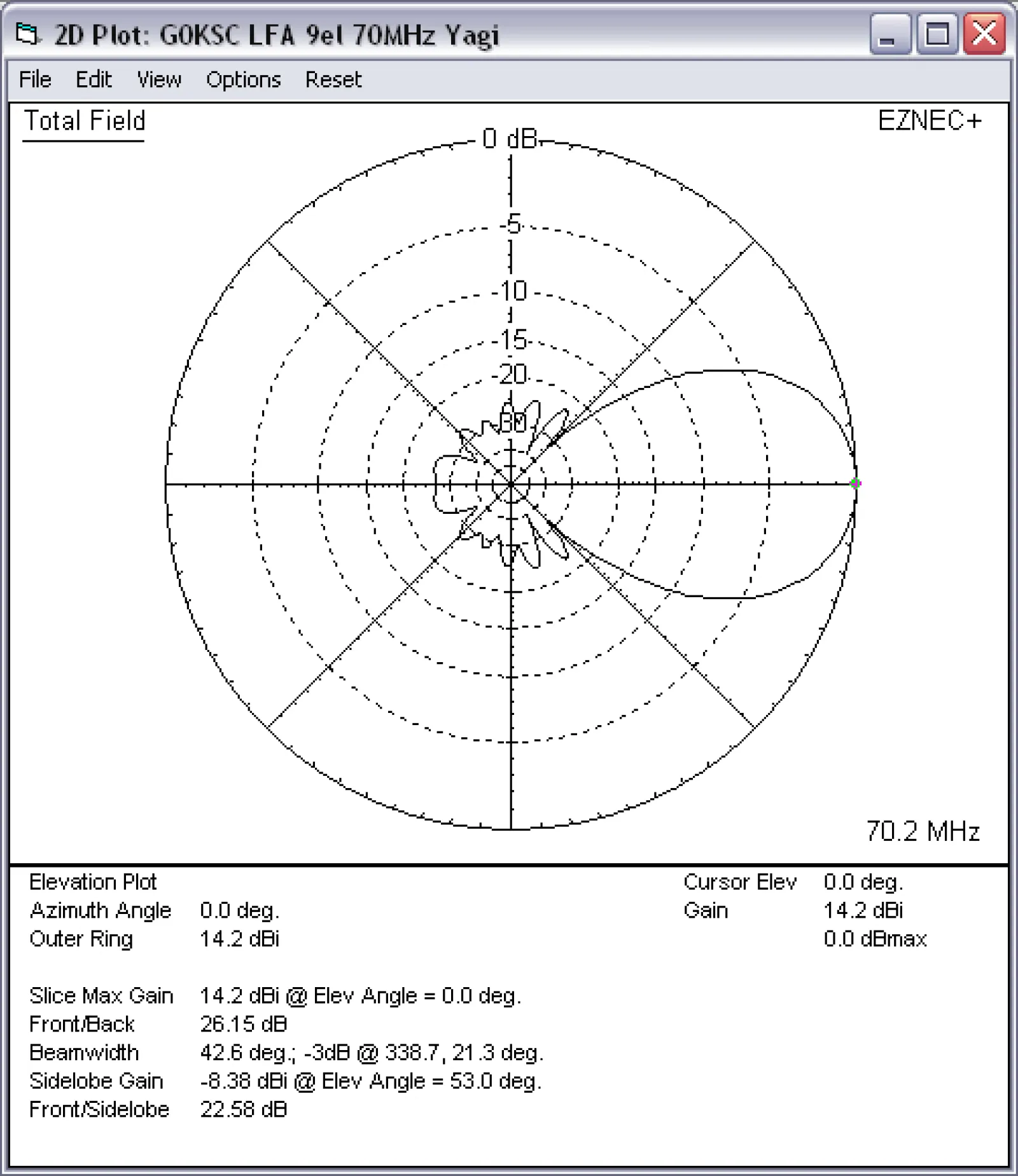
This antenna has been designed in order to minimise the upward and downward lobes typically seen the the EL plane on Yagi antennas. By doing this, a drastic reduction in pick up of unwanted noise in City locations is the result. The double bonus is the likelihood of reducing transmitted interference too. However, this version is not a model with optimum supression which would see a reduction in forward gain of 1dB. If you suffer with very bad noise on 70MHz and have room for an antenna of this size, Email me for details of the very high supression version
Performance
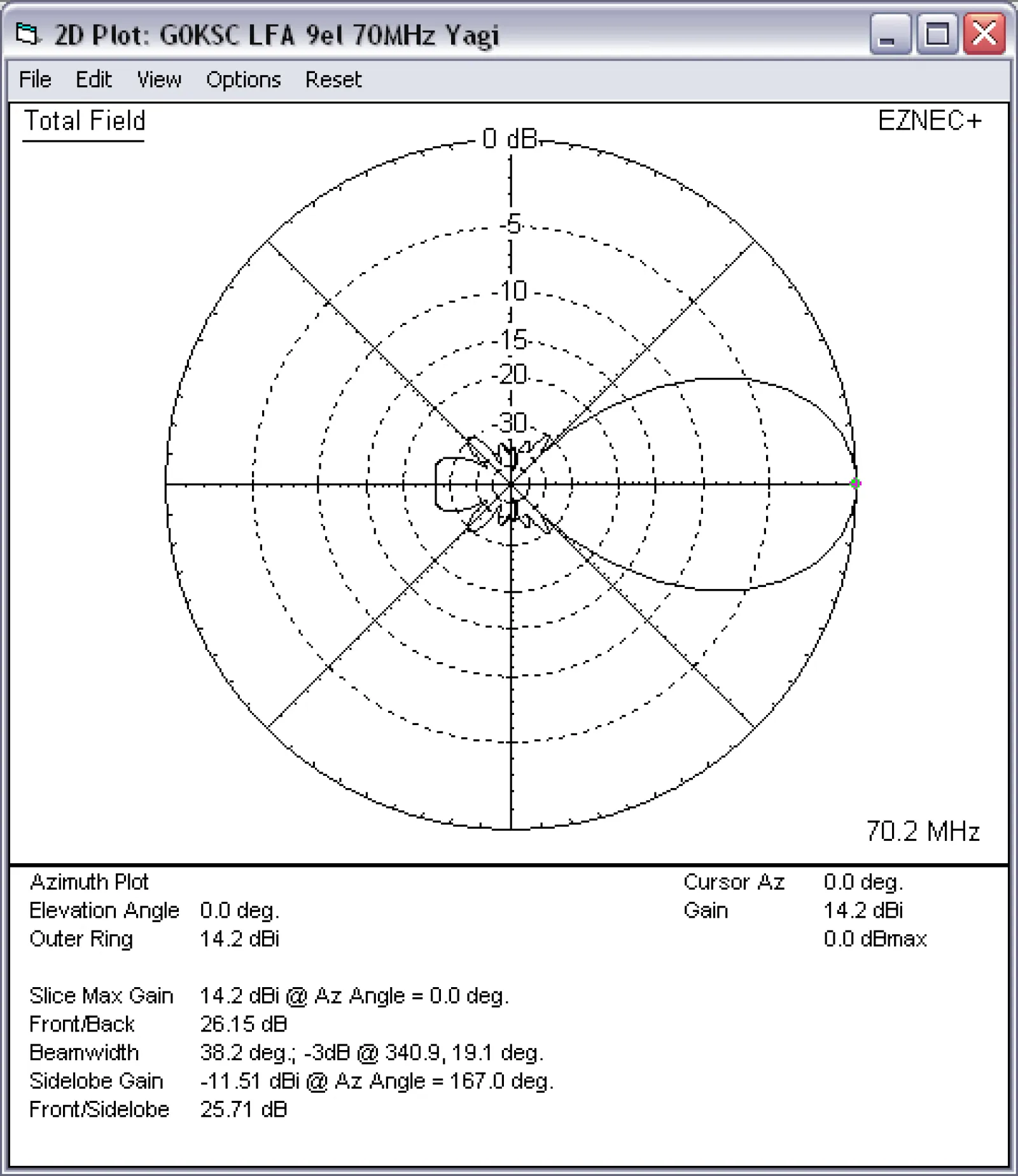
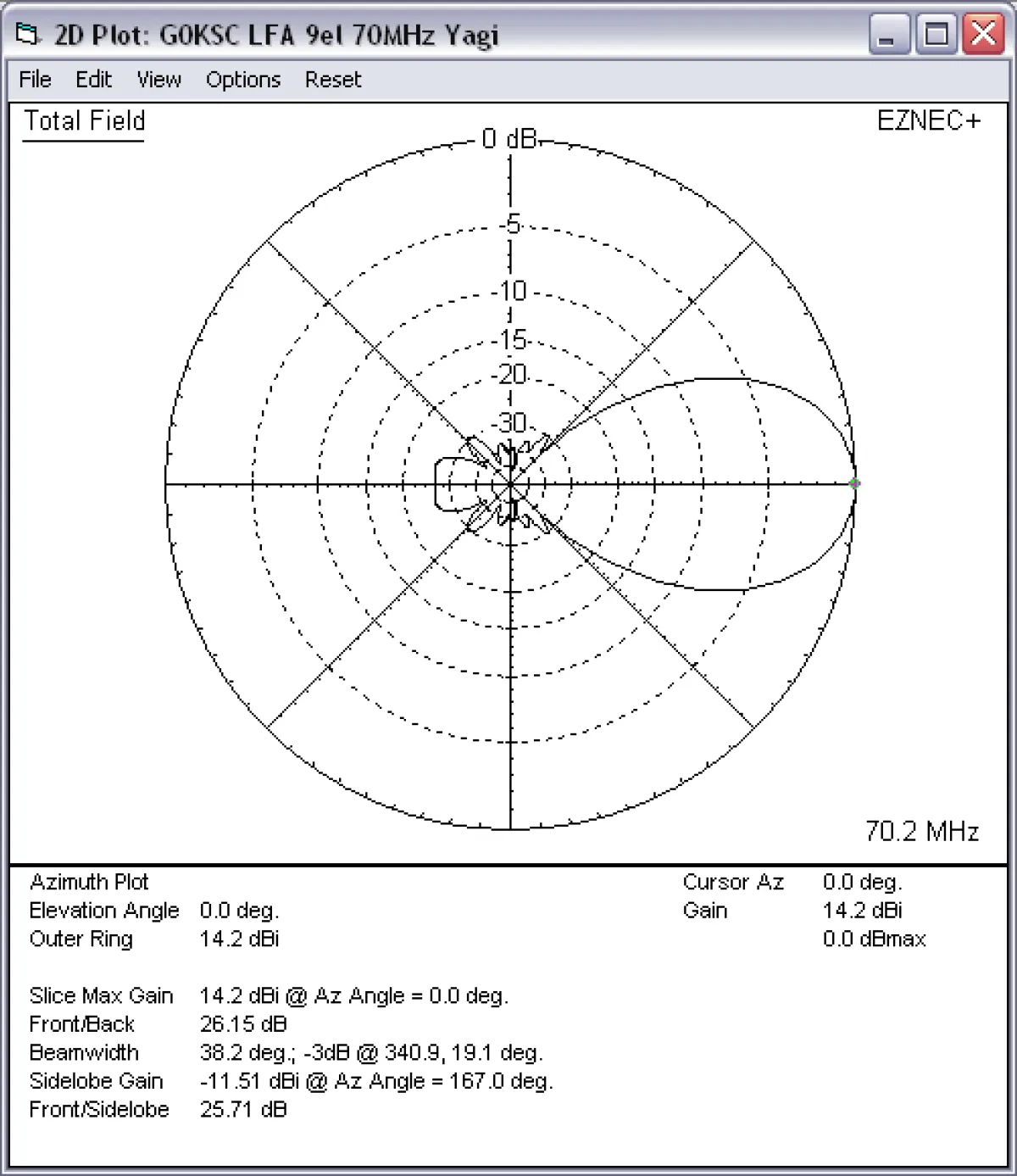
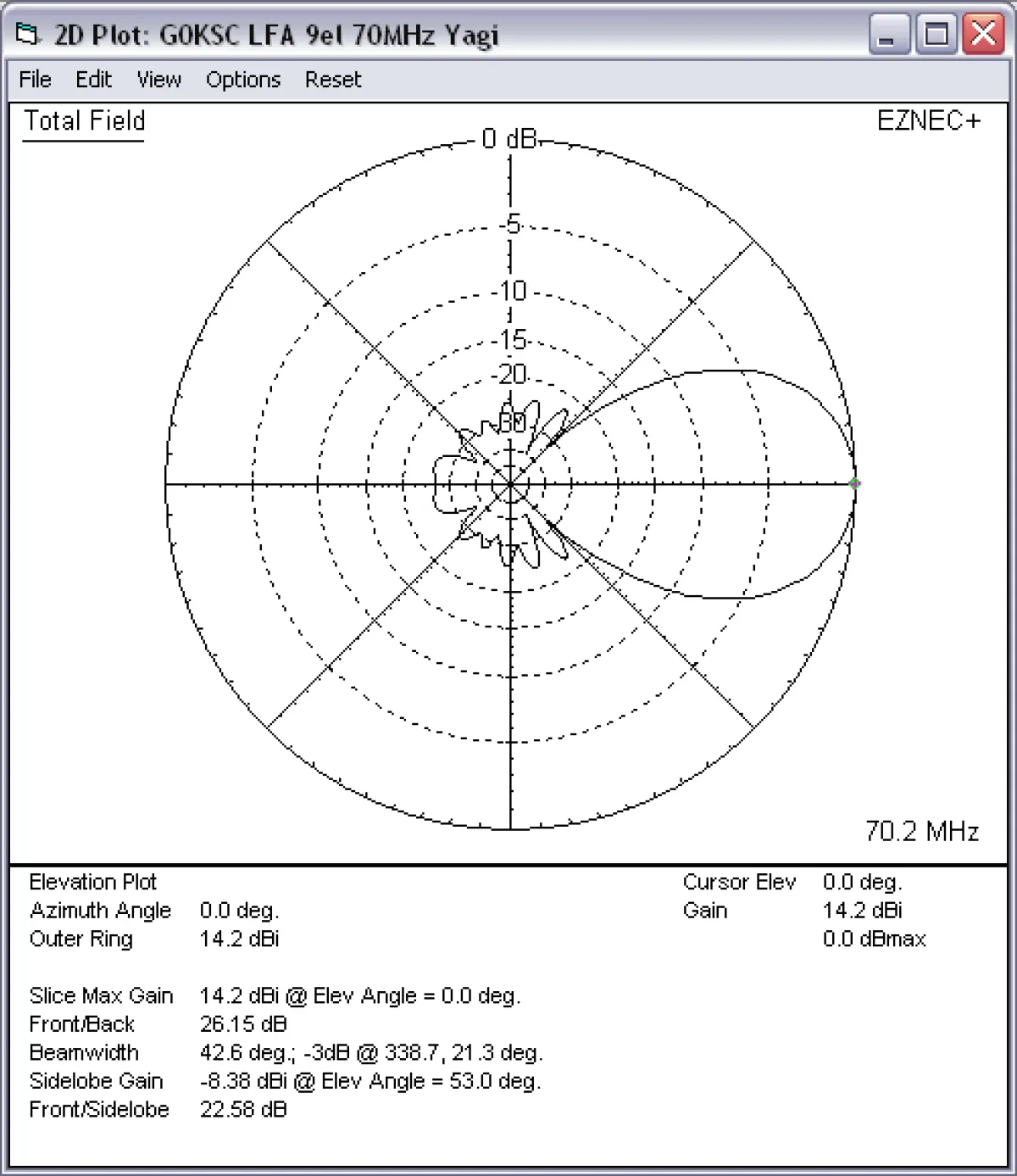
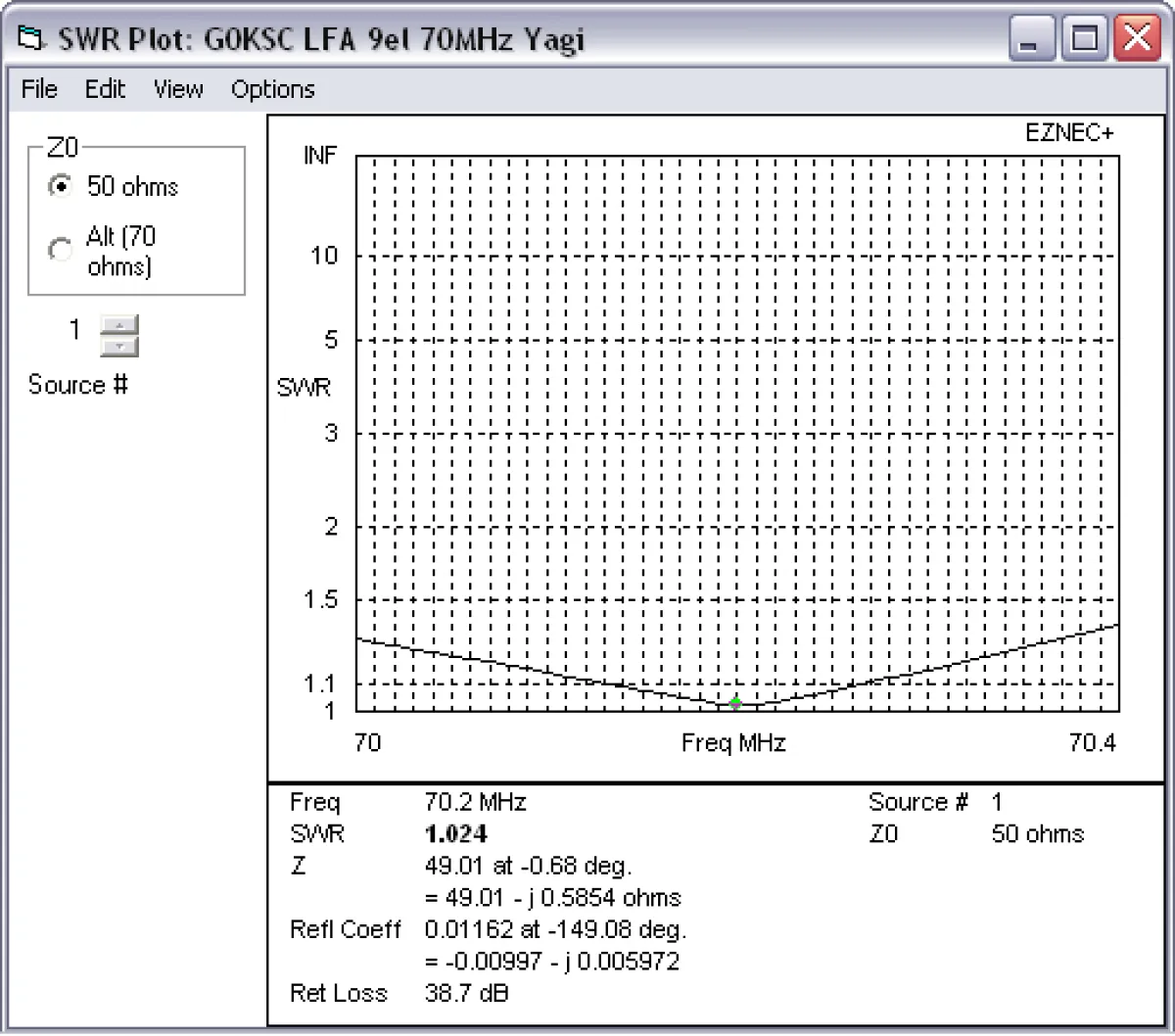
Gain: 14.2dBi @ 70.200MHz
F/B: 26.15dB @ 70.200MHz
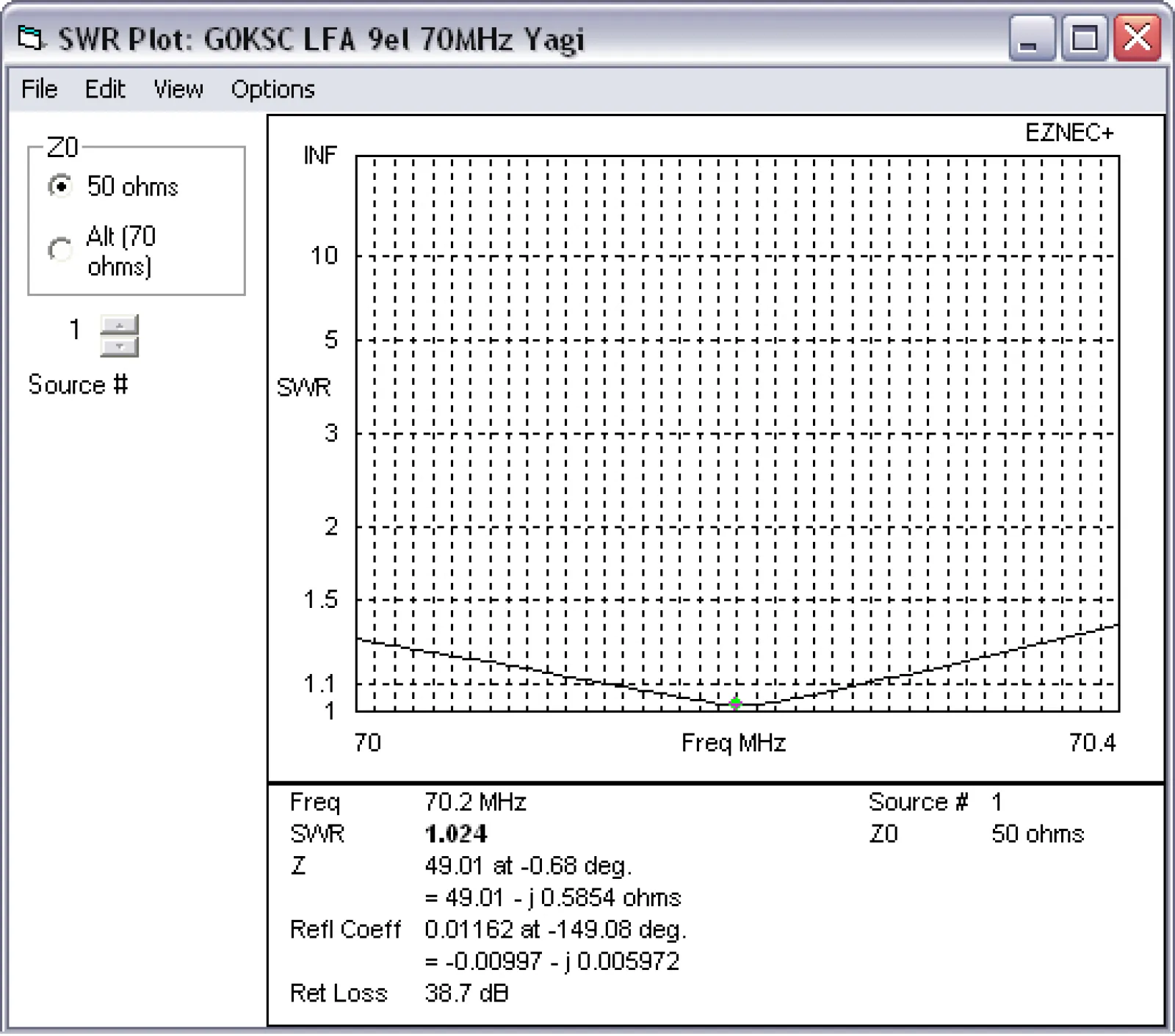
SWR: 1.0.1 @ 70.200MHz - bandwidth 500KHz 1.5.1
Construction
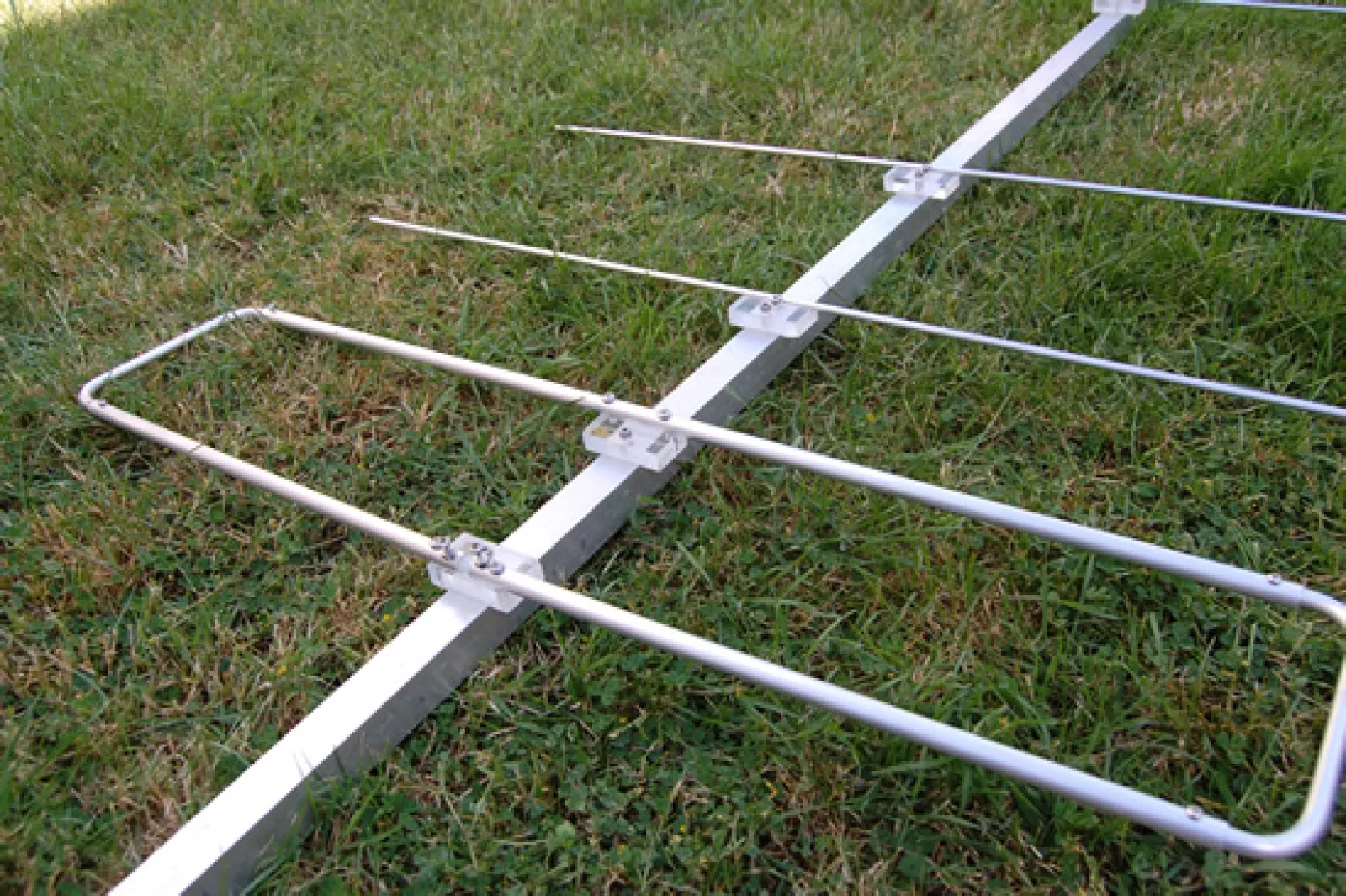
This antennas has been designed using 1/2 inch elements and the loop section is made of 2 x 1/2 inch lenghts with 3/8 inch sections inserted into each end in order to complete the loop. The loop is feed at the back nearest the reflector. Details of the loop layout as per picutre below:
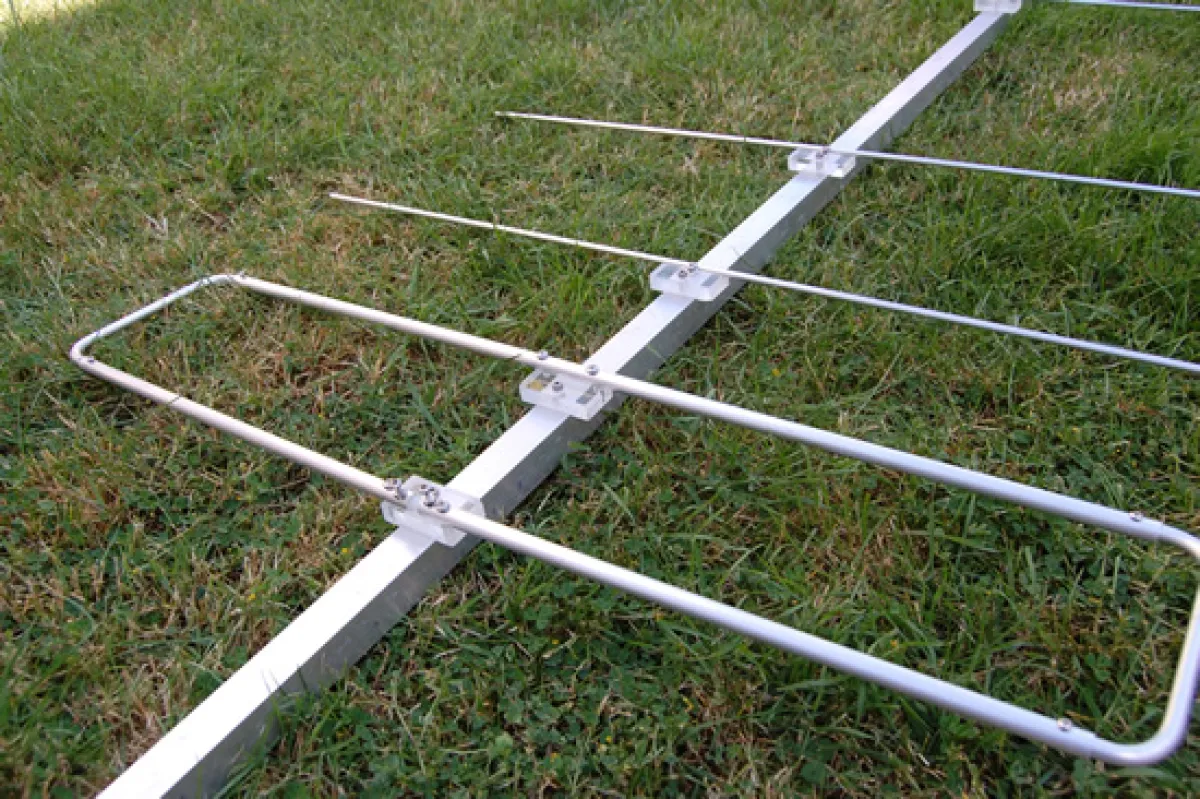
The above is a 144MHz version of the LFA which has smaller directors than the driven element. However, the construction of the loop section is the same on 70MHz as it is on 144MHz. Note the smaller 3/8 inch sections (with the bends) inserted into each end of the loop.
The 3/8 inch (9.6mm) tube is bent with a brake pipe which I purchased from Ebay for £3.99. This does and excellent job and gives a nice clean, tight bend. It is important to have the loop ends flat and not in a continous arch. This affects the side lobe supression.
I use 15mm thick perspex to completely isolate the elements from the boom (see above photo).
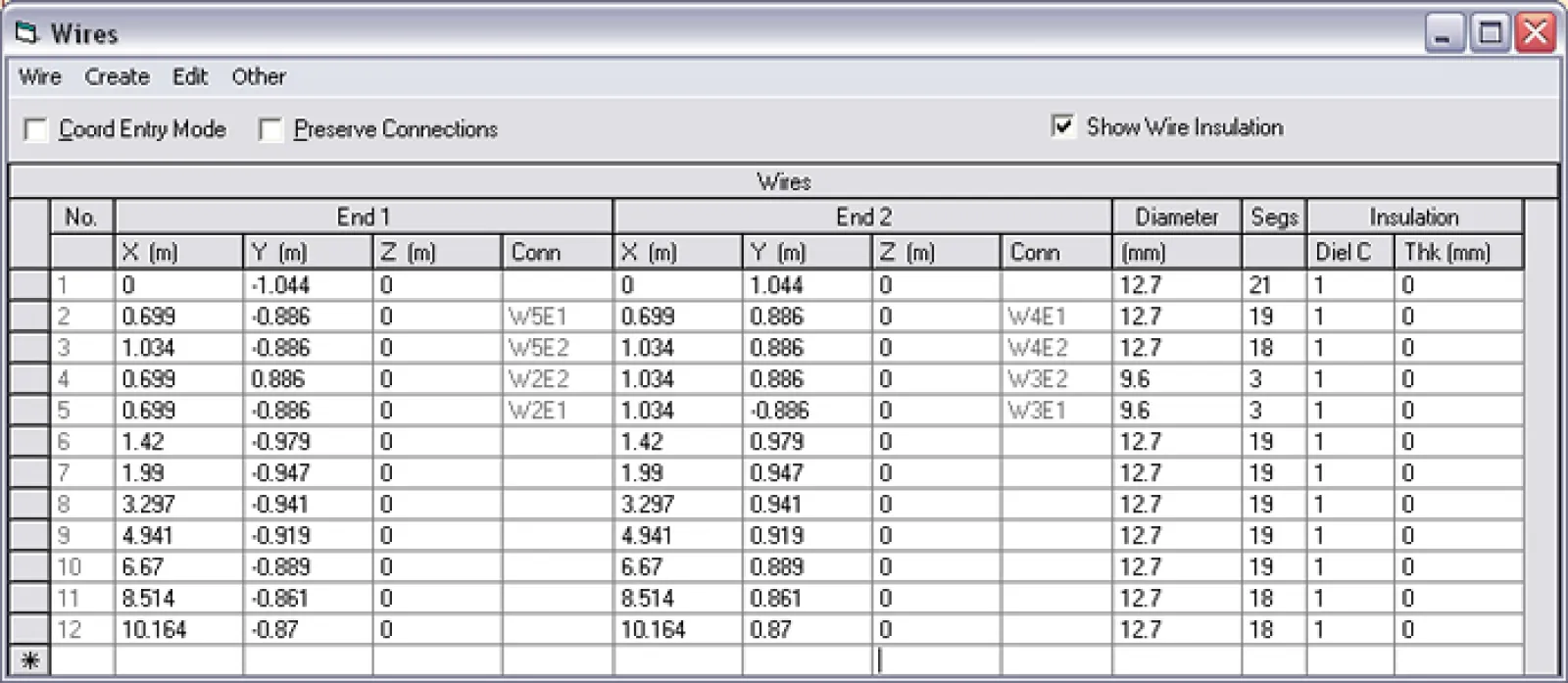
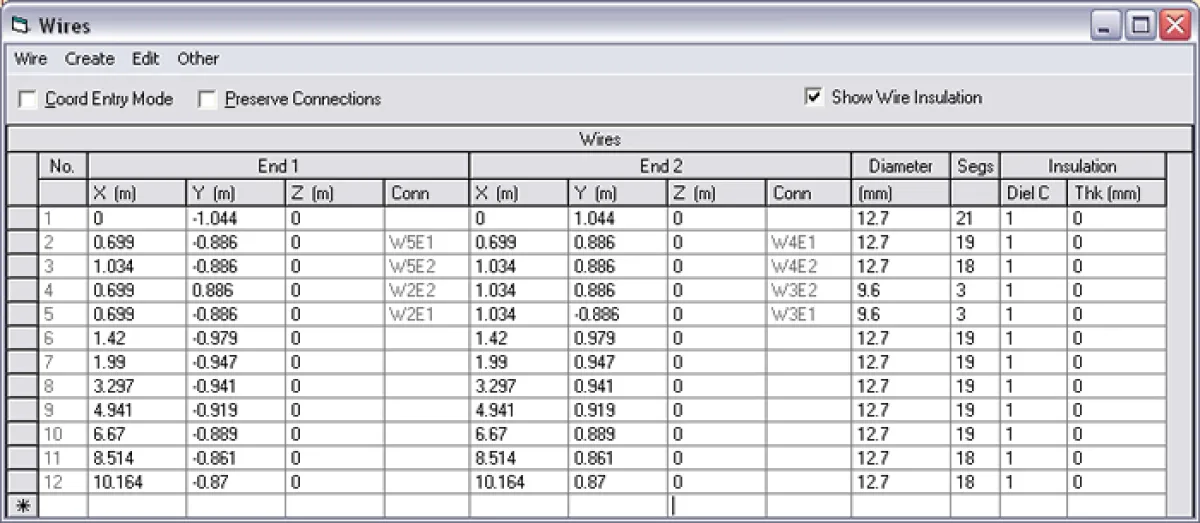
The EZNEC design file for this antenna is available for download on my download page.
Take a look at the following AZ and EL patterns
Any questions, ask.
Enjoy, Justin G0KSC